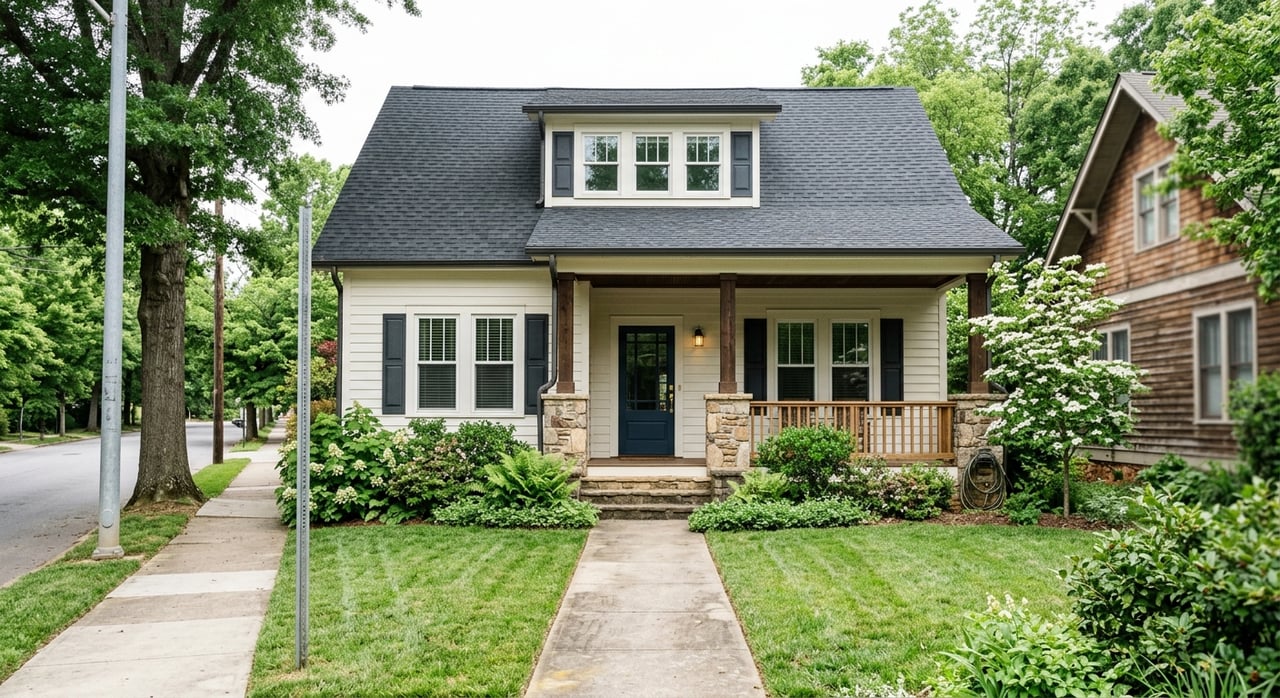
Hendersonville Homebuyer Guide: In-Town Vs Outskirts Living
May 28, 2026
May 28, 2026
Choosing between a home near downtown Hendersonville and one farther out is not just about price or square footage. It is really about how you want your days to feel, how much land you want, and what tradeoffs make sense for your budget and routine. If you are trying to decide between in-town convenience and a more spread-out setting on the outskirts, this guide will help you compare the factors that matter most. Let’s dive in.
In Hendersonville, this choice is not as simple as city limits versus county land. The city’s downtown core serves as the historic Main Street district, with shops, services, events, and the downtown transfer site for local transit. At the same time, city water and sewer service extends beyond the city line into parts of Henderson County.
That means an outlying home may still have access to some city utilities, while an in-town feel often comes down to density, lot size, and proximity to downtown amenities. In practical terms, buyers are usually comparing a more compact, service-connected setting with a more spread-out, lower-density one.
Zoning gives you a helpful way to understand how daily life may differ from one area to another. In Henderson County, the R1 district is typically used in Utility Service Area locations and has a standard density of 4 units per acre. The R2R district is typically used outside the Utility Service Area and has a standard density of 1 unit per acre.
That difference can affect how close your neighbors are, how much open space you have, and what the area may feel like over time. If you are looking for a home with a more compact pattern and easier access to services, in-town areas may line up better with your goals. If you want more breathing room, the outskirts may be a better match.
The lot-size rules highlight that contrast even more. The City of Hendersonville allows compact infill options, including small lots as small as 2,000 square feet in some cases. By comparison, some county zoning districts require much larger lots, and both the county and city R-40 districts require 40,000-square-foot minimum lots.
Your typical workday and errand routine can make this decision clearer. Census data shows a mean travel time to work of 19.2 minutes in Hendersonville city, compared with 22.5 minutes in Henderson County overall. That is only a few minutes on paper, but over time it can still shape your daily rhythm.
Hendersonville also sits about 25 miles from Asheville and 38 miles from Greenville. For some buyers, that means the real question is not just local commuting, but whether they want quicker access to regional routes and services.
Downtown living offers more backup options if you do not want to rely on your car for every single trip. Apple Country Public Transit serves Hendersonville, Fletcher, and Laurel Park with three weekday routes, and those routes originate from the downtown transfer site.
Parking access also supports a more flexible routine. The city lists 265 on-street paid parking spaces in Downtown Hendersonville, a 253-space parking deck, and more than 400 free on-street spaces just outside the district boundaries. If you like the idea of being closer to shops, services, and transit, in-town living may feel more convenient.
Homes farther from the downtown core are more likely to fit a drive-for-most-things lifestyle. That is not a negative if you prefer privacy, extra land, or a quieter setting. It simply means your errands, dining trips, and day-to-day schedule may depend more heavily on your vehicle.
Many buyers assume the outskirts will always be cheaper, but local data suggests that is not always the case. Current ACS estimates show the median value of owner-occupied housing units at $317,000 in the city and $351,400 countywide. Median monthly owner costs with a mortgage are listed at $1,250 in the city and $1,608 in the county.
These numbers reflect ownership stock rather than current listing prices, so they are not a shortcut for pricing any one home. Still, they show that moving farther out does not automatically mean you will spend less. Larger lots, different housing types, and lower-density settings can still carry a meaningful cost.
One of the biggest practical differences between in-town and outlying properties is utility service. The city says its water system serves more than 32,000 homes and businesses, and its sewer system serves more than 10,000. The current sewer service area includes the city, portions of Laurel Park and Flat Rock, and part of central Henderson County.
That means you should not assume a property outside the city lacks public utility access. At the same time, the city notes that residents not connected to the sewer system are either in unsewered areas outside the city or have chosen private systems.
Before you make an offer, it helps to confirm:
For buyers looking at land or build-ready parcels, this step is especially important. It can affect cost, feasibility, and how quickly you can move forward.
Taxes are another area where the in-town versus outskirts decision deserves a close look. For FY2025-26, the City of Hendersonville tax rate is $0.52 per $100 of assessed value. Henderson County’s general rate is $0.431 per $100.
Some locations also have additional layers. Properties in the Main Street and Seventh Avenue municipal service districts pay an added $0.21 per $100, and Henderson County notes that special district taxes such as fire district rates may also apply depending on the address.
The key takeaway is simple: your total property tax picture depends on the specific location, not just whether a home feels urban or rural. It is worth verifying the full tax structure before you commit.
For many buyers, this decision comes down to what they want their everyday lifestyle to look like. Downtown Hendersonville offers a historic business core with dozens of shops and services, along with a more active public-facing routine. If you enjoy being near errands, dining, and community activity, that convenience can be a major advantage.
The outskirts offer a different kind of appeal. Lower-density areas often provide larger lots, more separation between homes, and a setting that feels more open and removed from the center of town. For some buyers, that extra room is worth every added minute in the car.
One reason this choice can be hard in Hendersonville is that outdoor access is appealing on both sides. The Ecusta Trail is now open for its first six miles from downtown Hendersonville to Horse Shoe, offering a paved multi-use route that connects to shops and eateries.
As you move outward, the trail corridor shifts into more pastoral and wooded scenery. Buyers who picture the outskirts often have this kind of setting in mind when they talk about wanting more of a mountain lifestyle.
Nearby recreation adds to the appeal across the area. Jump Off Rock is about 15 minutes from Main Street, DuPont State Recreational Forest spans more than 10,000 acres across Henderson and Transylvania counties with about 80 miles of roads and trails, and North Mills River Recreational Area is listed as 13 miles from Hendersonville.
An outlying home may make some of those destinations feel closer to your daily life. But downtown residents still have fairly direct access, which is part of what makes Hendersonville such a flexible market for different types of buyers.
If you are still weighing both options, it helps to think less about labels and more about your actual routine. The best choice is the one that supports how you want to live day to day, not just what sounds good during an online search.
Here are a few practical questions to ask yourself:
If you are buying a home, lot, or future build site, these details matter. They affect not just your monthly costs, but also your long-term satisfaction with the property.
There is no one-size-fits-all answer in Hendersonville. In-town living may suit you best if you want convenience, somewhat shorter average commutes, and easier access to downtown shops, services, parking, and transit. The outskirts may be the better fit if you want a lower-density setting, a larger lot, or a more car-oriented routine with easier access to open landscapes.
The good news is that Hendersonville gives you both options within a relatively connected area. If you want help comparing neighborhoods, utility service, lot considerations, or the tradeoffs between an in-town home and a more rural property, Cherie Goldsmith can help you sort through the details with clear, practical guidance.
Stay up to date on the latest real estate trends.
Our intent is to leave a legacy that speaks of honesty, allegiance to our community and the need to do the right thing without regard for monetary gain. We are available weekdays as well as weekends, call or email us for help with all your real estate needs.