Buying Small Acreage In Horse Shoe
June 11, 2026
June 11, 2026
Dreaming about a few acres in Horse Shoe? It is easy to fall for the quiet setting, extra elbow room, and vision of a future home, garden, or workshop. But with small acreage, what looks simple on a listing can get complicated fast once you check access, septic, slope, and county rules. If you want to make a smart offer and avoid expensive surprises, this guide will help you focus on what matters most. Let’s dive in.
Buying small acreage in Horse Shoe is not just about the number of acres on paper. In unincorporated Henderson County, site feasibility often shapes whether a parcel works for your plans. That includes access, septic and well viability, slope, floodplain concerns, watershed overlays, and whether future improvements fit county rules.
The county’s land development and permit process brings these issues forward through site plans, zoning review, and environmental health review. That means your best move is to investigate these items before you make an offer, not after. A beautiful tract can still be limited if the usable area is smaller than it appears.
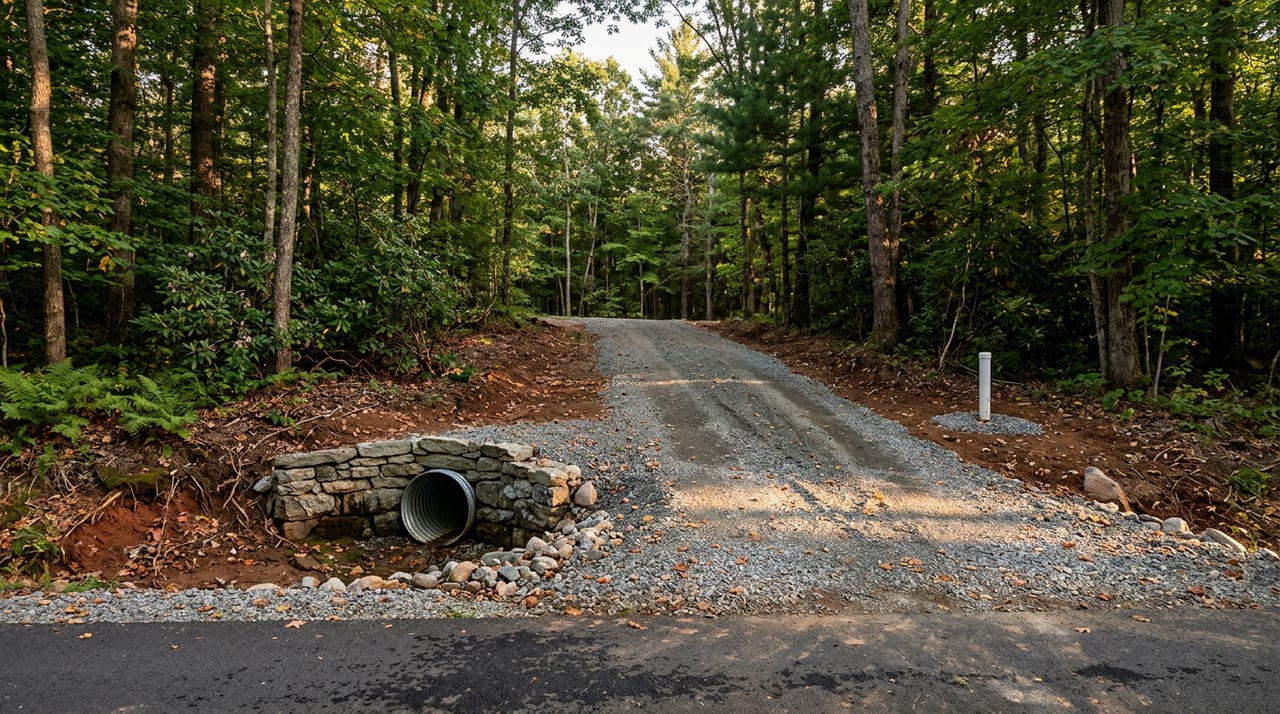
Access is one of the first things to verify on a Horse Shoe land purchase. You want to know whether the parcel is served by a public road, a private road, or a recorded driveway easement. You also want to confirm that the access is legal, usable, and shown clearly on the survey and plat.
If access connects to a state-maintained highway, new or modified access may require a driveway permit through NCDOT. Henderson County’s site plan form also asks for the driveway used for primary access and any easements or rights-of-way affecting the parcel. In plain terms, that means the driveway location is not a minor detail.
Private roads and shared driveways can work well, but they deserve a closer look. County subdivision regulations classify private roads by the number of lots they serve and require unobstructed emergency access. If a private driveway easement serves up to five lots, the plat must also include a maintenance note.
If the property is gated, county rules require immediate emergency and law-enforcement access, along with reasonable access for county staff and utility providers. Before you offer, make sure you understand who maintains the road, how access rights are recorded, and whether emergency vehicles can get in without issue.
On small acreage, septic and well feasibility often matter more than total acreage. Henderson County evaluates septic suitability based on topography, landscape position, soil characteristics, soil wetness, soil depth, restrictive horizons, and available space. So even a parcel with enough acreage may not have enough suitable area for the system you need.
The county requires a completed site plan before environmental health can schedule a lot evaluation or assign an address. A lot-evaluation application also requires a plat. If you are considering raw land, this is one of the most important reasons to move carefully.
Henderson County keeps septic and well permit searches online, which can help you see whether a parcel has a historical approval or only an older archive record. That permit history can give you a more realistic picture of the property’s potential. It can also reveal whether you are starting from scratch.
If public water or sewer is available, the county’s building permit checklist requires tap receipts. For private wells, North Carolina requires new wells to be tested before use, and state guidance says new wells since 2008 are sampled through local health departments and the State Lab. That makes early utility research well worth your time.
A parcel can feel very different once you study the terrain. In the Horse Shoe area, buyers should compare county slope data, landslide mapping, flood data, and soil information before assuming a lot is buildable. Henderson County GISWeb includes parcel and hazard mapping layers, including percent slope, landslide data, and flood data.
The county also points buyers to the USDA Web Soil Survey for soil characteristics and limitations. This matters because the most useful part of a parcel is not always obvious from photos or a rough map. A steep hillside, drainage pattern, or poor soil area can reduce where you can place a house, driveway, garden, or outbuilding.
Henderson County defines a steep slope as greater than 60 percent. The county’s steep-slope procedures also show that some land-disturbing activity on steeper terrain can trigger erosion-control review even at relatively small disturbed areas. That is why a current topographic survey can tell you much more than a basic acreage number.
The county also notes that road layout should follow the contour of the land where possible because steep grades increase erosion and drainage problems. If your dream lot has mountain character, that can be part of the appeal. It also means the layout needs to work with the land, not against it.
If a parcel sits near a creek or low area, floodplain review should be part of your pre-offer checklist. Henderson County provides floodplain tools, and buyers can also use NC FRIS to understand flood-prone areas. This step is especially important when a property looks flat and easy to build on, because low, attractive ground can come with added limits.
Watershed overlays can also affect what you can do with a property. If the parcel falls within a water-supply watershed overlay, Henderson County applies limits tied to lot size and built-upon area. Watershed permits are also required for new structures and changes to impervious surface.
One of the biggest mistakes buyers make is focusing only on whether a house can fit today. If you may want a detached garage, barn, workshop, or second dwelling later, those possibilities should be part of your early review. Small acreage can get tight quickly once septic reserve areas, setbacks, access, slope, and overlays are factored in.
This is where practical planning can save you frustration. A tract may be large enough for your current idea, but not flexible enough for future improvements. If you are buying with a long-term vision, ask those questions now.
Henderson County allows accessory structures in side, rear, or front yards with minimum 5-foot side and rear setbacks and 10-foot front or right-of-way setbacks. On lots of one acre or more, the accessory-building height restriction does not apply. That can be helpful if you want more freedom for a workshop, storage building, or similar structure.
Still, placement matters. The location of the driveway, house site, septic area, and topography can affect whether an outbuilding fits in a practical way.
Henderson County generally allows only one accessory dwelling per deeded lot. It may be attached, within, or detached, but it cannot exceed 75 percent of the principal dwelling’s gross floor area. Mobile homes, park model homes, and RVs are not allowed as accessory dwellings.
Manufactured homes can be accessory dwellings only where they are permitted as a principal use. If you are hoping to create extra living space for guests or extended household use, it is smart to check these limits before you get attached to a specific parcel.
If your project will disturb more than one acre, Henderson County’s erosion-control ordinance requires an approved plan. The county’s site-development guidance also flags one-acre land disturbance for review. On mountain land, that threshold can come into play faster than buyers expect, especially if a long driveway, grading, or clearing is needed.
This is another reason to ask practical questions early. A builder can often help you estimate whether the amount of clearing and grading may push the project into added review requirements.
A strong land offer starts with the right questions. The goal is not to overcomplicate the purchase. The goal is to understand whether the parcel truly supports your plans.
In Horse Shoe, the best acreage buyers look past the listing description and test the tract against county maps, permit records, and real site constraints. The deciding factors are often access, septic and well feasibility, slope, and overlay limits. When you understand those pieces early, you can move forward with more confidence and fewer surprises.
That kind of due diligence is especially helpful in mountain communities, where a parcel’s value comes from what you can actually do with it. If you want practical guidance from a local team that understands both land and construction realities, reach out to Cherie Goldsmith.
Stay up to date on the latest real estate trends.
Our intent is to leave a legacy that speaks of honesty, allegiance to our community and the need to do the right thing without regard for monetary gain. We are available weekdays as well as weekends, call or email us for help with all your real estate needs.