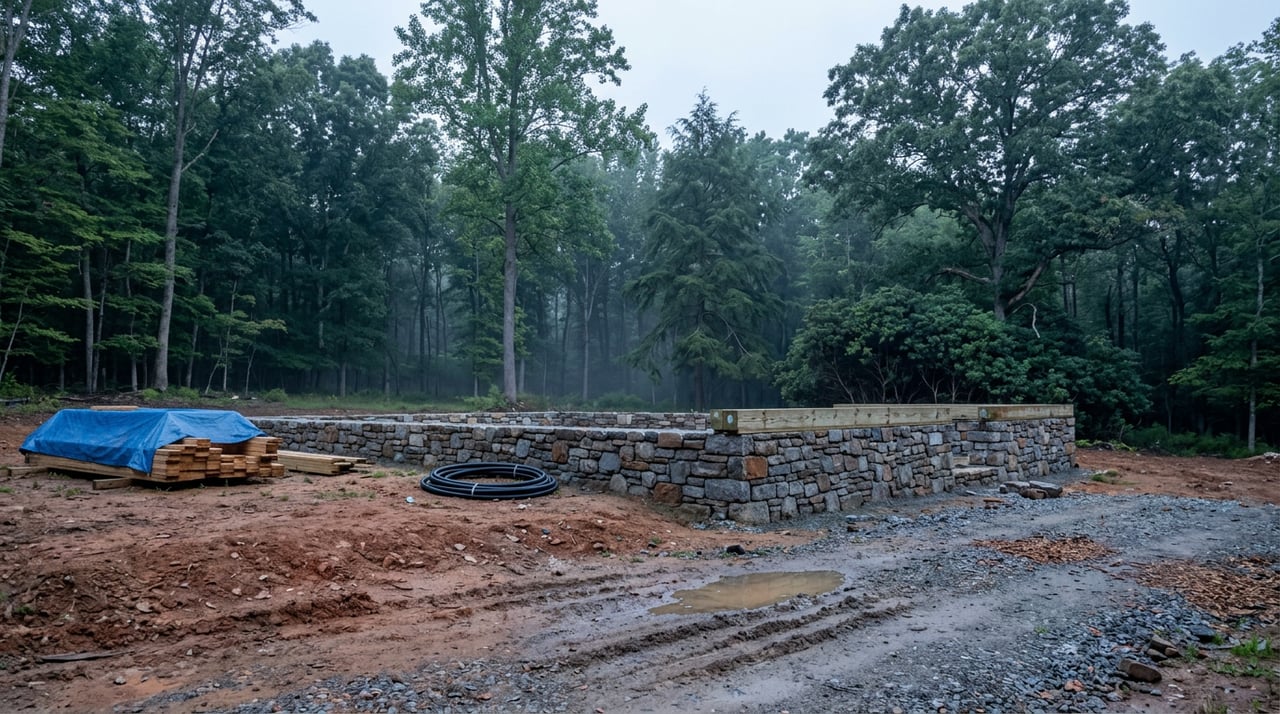
Buying Land in Etowah, NC: What "Sewer Available" Actually Means Before You Build
land Scott Goldsmith September 24, 2026
land Scott Goldsmith September 24, 2026
Pull up two lots in Etowah on the same afternoon and you can find one word doing all the heavy lifting in both listings: sewer. One says sewer is available. The other says the same thing. On paper they read like the same green light. In practice, they can point to two entirely different systems, two different owners, and two very different odds that you'll be pouring a foundation next spring instead of next decade.
That gap is the whole story for anyone buying raw land in Etowah right now. The word "sewer" isn't a single fact you check off. It's a fork in the road, and which branch you're on determines who controls your timeline, what you'll actually pay, and whether a lot that looks buildable today stays that way by the time you're ready to break ground.
In Etowah, "sewer" can mean one of three things, and each comes with its own risk profile.
The first is individual septic. No pipe runs to a treatment plant. Instead, the lot itself has to pass a site evaluation from Henderson County's Environmental Health department before a permit is issued. The county's own process spells this out plainly: an inspector visits the property, checks the available soil and space, and either approves an Improvement Permit or denies the application outright. A pretty ten-acre parcel with a creek and a view is not automatically a buildable ten-acre parcel. The dirt has to cooperate.
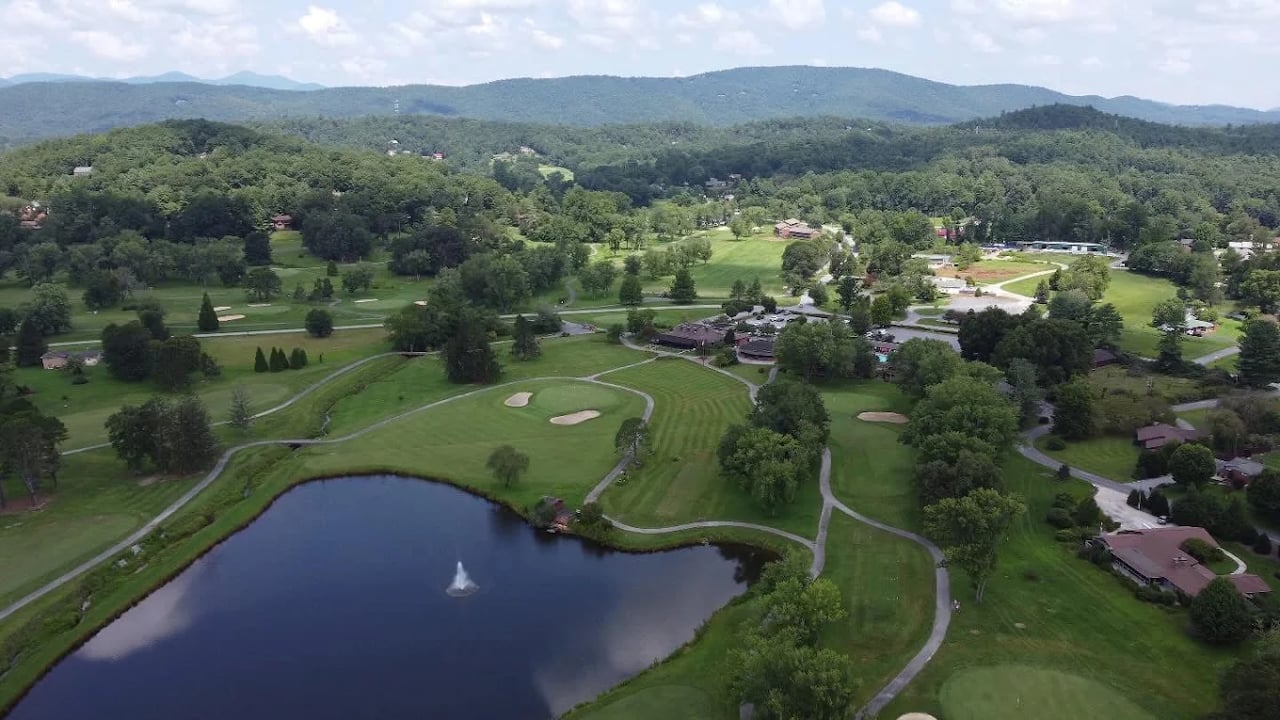
The second is a private community system, the kind you'll find inside gated developments like Cummings Cove. These aren't connected to any municipal or county sewer at all. They're privately owned wastewater treatment operated by the community itself, paired in Cummings Cove's case with Hendersonville city water. Lots there are sometimes sold with the connection fee already handled, and it's not uncommon to see a listing note that a five thousand dollar prepaid sewer connection fee has already been paid on the buyer's behalf. That's a real cost that's already been absorbed into the deal, not a future unknown.
The third is the legacy Etowah Sewer System, and this is the one that changed hands in a way most buyers scrolling listings have no reason to know about.
For years, the Etowah Sewer Company was privately owned. In July 2024, Henderson County commissioners voted to buy it, and the purchase closed on August 19, 2024. That single transaction moved decision-making power over new connections from a private operator to the county government, and with it came a new layer of process: a five-member Etowah Sewer Advisory Committee, created that September, tasked with reviewing plans for repair, upgrades, and operation of the system and advising the Board of Commissioners on what happens next.
When commissioners were weighing the purchase, WHKP reported that then-County Manager John Mitchell said wastewater is "one of the big driving factors in any development," and that while the treatment plant technically holds a permit allowing it to grow larger, "there are no plans at this time to expand it." Around the same meeting, county staff told commissioners they were still evaluating the system's actual capacity and budget before making any bigger moves.
That framing still shows up in how lots are marketed today. Search current listings in Etowah and you'll find at least one flat, easy-to-build lot advertised with sewer connection available, but delayed until additional capacity is added by the county. That's not boilerplate. That's the 2024 acquisition and its capacity question, still working its way through the system, sitting quietly inside a 2026 listing description.
The Etowah Sewer Advisory Committee meets on a recurring schedule, typically the fourth Wednesday of January, April, July, and October, at the Horseshoe Etowah Fire Department on Morgan Road. Meeting summaries are posted publicly, including one from January 27, 2026, which means this isn't a closed conversation. Anyone considering a lot tied to the county system can watch it unfold in real time.
Contrast that with what's happening inside Cummings Cove. The community's own private wastewater system isn't waiting on a county capacity study. County planning records show Cummings Cove has continued moving forward with its own development, including a revised master plan that combined two phases into a proposed 76 single-family lots, all slated to be served by the existing private community wastewater treatment plant rather than any county infrastructure.
In other words, a lot inside Cummings Cove and a lot on the broader Etowah county sewer grid are subject to two completely different growth conversations, run by two completely different decision-makers, on two completely different timelines. One is shaped by a homeowners association and its private utility. The other is shaped by county commissioners, a capacity study, and an advisory committee that meets quarterly. Neither is better or worse on its face. They're just not the same thing, and a listing that simply says "sewer" doesn't tell you which conversation you're walking into.
Plenty of Etowah land sits outside both of those systems entirely, which means the only question that matters is whether the soil itself will support a septic system. This is where due diligence gets tactile rather than bureaucratic. A lot near Crystal Cove currently on the market advertises that soil records and a septic evaluation are already on file, letting a buyer start building without waiting on a fresh site visit. That's the septic equivalent of the Cummings Cove prepaid connection fee: someone already did the legwork, and it's baked into the value of the lot.
Compare that to a lot with no septic history at all. Henderson County's Environmental Health office can search historical records by parcel or subdivision name, but for lots that have never been evaluated, a buyer is starting from zero, and the outcome isn't guaranteed. If a site evaluation comes back showing there isn't enough usable soil or space, the permit can be denied outright, no matter how good the lot looks from the road.
Here's the pattern once you line the three up side by side.
System | Who controls it | What you're actually paying for | What can stall the build |
|---|---|---|---|
Individual septic | You, once approved | Site evaluation and installation | A failed or incomplete Environmental Health evaluation |
Private community system (like Cummings Cove) | The HOA or community utility | A connection fee already built into many lot prices | HOA capacity, membership terms, dues |
County-run Etowah Sewer System | Henderson County, since August 2024 | A tap fee tied to available capacity | Countywide capacity limits under active review |
None of these is automatically the safer bet. A septic lot with records on file can be faster to build on than a county-sewer lot waiting on capacity. A private system inside a gated community can move on its own schedule regardless of what the county decides. The point isn't that one system wins. It's that the word "sewer" on a listing sheet is standing in for three very different sets of facts, and only one of them is something you can verify by making a phone call before you write an offer.
A few questions separate a buyer who understands what they're getting into from one who finds out at closing:
None of these questions require a lawyer or an engineer to ask. They require knowing that the question exists. A one-word listing description does not answer these questions.
Etowah isn't short on buildable land. It's short on buyers who know that "sewer available" is a starting point for a conversation, not the end of one. The lot's price reflects the seller's confidence in that system. Your due diligence should reflect your own.
This is the kind of question that's easier to answer with someone who has stood on both sides of it, as a land developer/builder and as a broker. If you're looking at raw land in Etowah and want a second set of eyes on what system a specific parcel actually sits on, Homestead Realty is happy to walk the lot with you before you write the offer, not after.
This article is general information, not legal, tax or financial advice. Consult a qualified professional about your situation.
Stay up to date on the latest real estate trends.



land
etowah
etowah
Our intent is to leave a legacy that speaks of honesty, allegiance to our community and the need to do the right thing without regard for monetary gain. We are available weekdays as well as weekends, call or email us for help with all your real estate needs.