Beginner’s Guide To Buying A Buildable Lot In Pisgah Forest
Scott Goldsmith May 7, 2026
Scott Goldsmith May 7, 2026
Thinking about buying land in Pisgah Forest so you can build your own home? It can be an exciting step, but mountain lots are not all created equal. A parcel that looks perfect online can turn out to be limited by slope, septic, access, or flood rules. This guide will help you understand what makes a lot truly buildable in Pisgah Forest and what to check before you buy. Let’s dive in.
A buildable lot is not just a piece of land where you hope a house will fit. In Pisgah Forest, it needs to work both physically and legally for a home, driveway, and wastewater plan.
That means you need enough usable space after setbacks, access limits, flood concerns, stream protection, and septic or well requirements are considered. In other words, the real question is not just, “Can I buy this lot?” It is, “Can I actually build what I want on it?”
Before you look at soil, views, or house plans, confirm which rules apply to the parcel. Transylvania County does not have county-wide zoning, but Pisgah Forest Community Zoning is administered by the County Planning Department.
The county also advises buyers to check GIS layers for Flood, ETJ, and Zoning. This helps you confirm whether the property falls under county rules or under the City of Brevard’s jurisdiction or ETJ.
This step matters because the rules that shape your buildable area can change depending on where the lot sits. A listing description may be helpful, but it should never replace checking the county maps yourself.
A useful way to think about a vacant lot is to picture its buildable envelope. This is the part of the property left over after the main constraints are mapped out.
That includes setbacks, driveway access, flood hazard areas, stream buffers, and wastewater limitations. On some lots, the buildable envelope is roomy and flexible. On others, it can be much smaller than the full acreage makes it seem.
In Pisgah Forest, slope is one of the biggest factors in whether a lot is easy or expensive to build on. The local ordinance defines steep slope areas as 25 percent or greater, and those areas are subject to special development standards.
Those standards can affect subdivisions, driveways, and access roads. The ordinance also requires five-foot contour data on the site plan and places limits on certain cut and fill slopes unless a North Carolina licensed geotechnical engineer designs and certifies them.
For you as a buyer, that means a steep lot is not automatically a bad lot. It does mean you should expect more review, more design work, and possibly higher site-prep costs.
NC State Extension recommends paying close attention to features like gullies, ravines, rocky ground, wetlands, flood-prone low spots, and steep areas. These are common red flags that can affect where and how you build.
Even if a lot has a beautiful setting, those site conditions can narrow your options. They can also increase the cost of grading, retaining walls, drainage work, or engineered solutions.
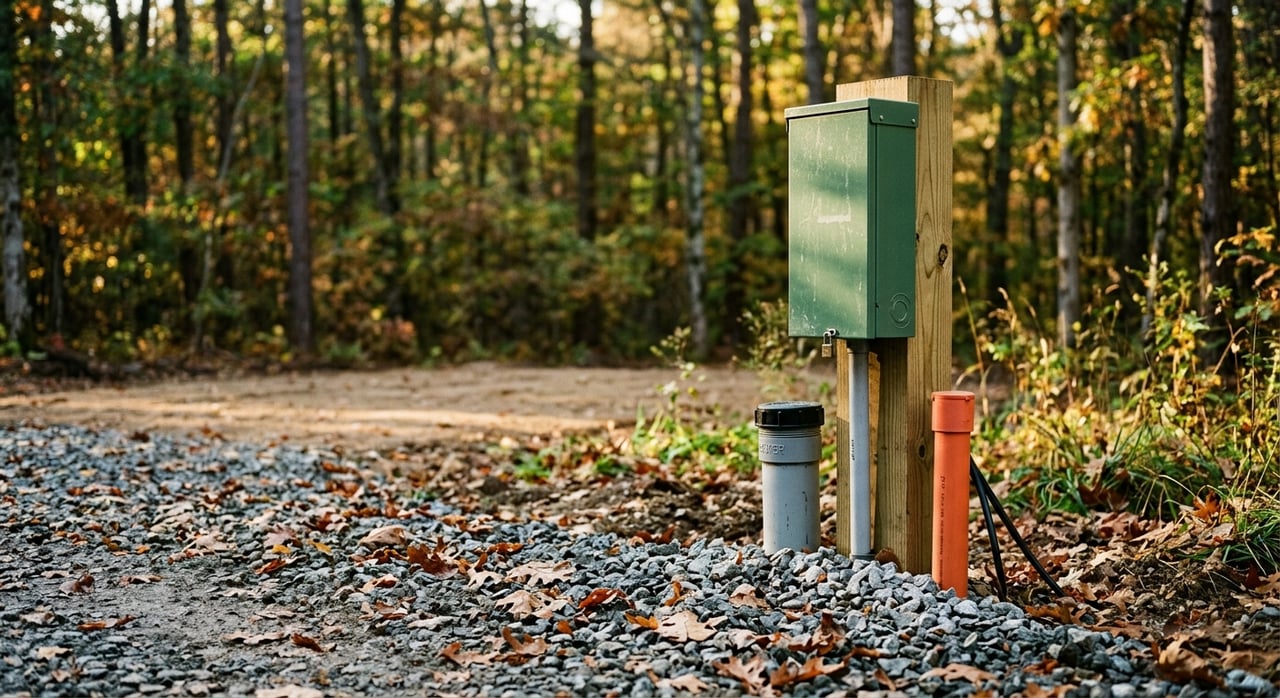
Many lots in Pisgah Forest are not served by public sewer or water. If that is the case, Transylvania Public Health says a new home needs both an Improvement Permit and an Authorization for Wastewater System Construction.
If public water is not available, a well permit is also necessary. State rules also require an Improvement Permit before wastewater construction and a Construction Authorization before the system is built.
This is one of the most important parts of land due diligence. If the lot cannot support the needed wastewater system, the home you want may not be possible.
A soil survey can be a helpful screening tool, but it does not replace an onsite evaluation. NC State Extension is clear on that point.
If you are serious about a parcel, ask Environmental Health about septic feasibility before you get too far into the process. When buildability is uncertain, NC State Extension recommends making the purchase conditional on permit success. At Homestead Realty we recommend always making a land purchase contingent on septic permit.
Not every lot will support a conventional septic system. On difficult sites, an alternative wastewater system may be needed.
According to NC State Extension, the right septic system depends on soils and site conditions. A lot that is too wet or too shallow for a standard system may still work, but only with a modified or engineered option.
A lot is not truly buildable if you cannot get safe, legal access to it. In Pisgah Forest, roads and driveways that connect to a public road require an NCDOT permit.
The county’s access-management rules can also limit curb cuts and driveway spacing. That is why access needs to be checked early, especially on lots with narrow frontage or challenging terrain.
NCDOT advises buyers to contact the local land-use authority and the district engineer early in the process. Timing can vary, with simple driveway permits taking about four weeks or less and more complex requests taking eight weeks or more.
Flood risk is another key piece of the puzzle. Transylvania County says construction in a designated flood area requires a Floodplain Development Permit.
The county’s residential permit checklist also asks whether the parcel is in a designated flood zone. If part of the lot is in a flood-prone area, that may reduce the portion of the property where you can place a home or driveway.
Streams matter too. In Pisgah Forest zoned areas, the ordinance creates surface-water protection areas within 20 feet of the top of bank of streams or other surface waters.
That protection area can affect where you place structures, driveways, or site improvements. On smaller lots, this can make a big difference.
If you want to lower surprises, follow a clear order of operations before you close.
Review Flood, ETJ, and Zoning layers through Transylvania County GIS. This helps you confirm jurisdiction and spot obvious constraints before spending money on deeper inspections.
A current boundary survey helps confirm boundary lines, easements, and possible encroachments. In North Carolina, title insurance does not protect against certain issues like boundary discrepancies, encroachments, or unrecorded easements if you do not also obtain a survey at closing.
Contact Transylvania Public Health or Environmental Health early. This step can help you learn whether the property appears likely to support the type of wastewater system your home will need.
Check whether a driveway permit is needed and whether the location works under NCDOT and local access rules. Permit timing can affect your build schedule more than many buyers expect.
The county’s residential permit checklist calls for septic approval, a GIS tax map or survey, a site address, and a floodplain permit when applicable. It also calls for erosion-control measures for land-disturbing activity of 4,000 square feet or more, while state erosion-control review applies to land disturbance over one acre.
In North Carolina, licensed attorneys handle property closings and disbursement through trust accounts. That makes legal review and closing coordination an important final step.
When you buy land in Pisgah Forest, several local offices and professionals may play a role.
One common mistake is assuming acreage equals buildability. A five-acre parcel with steep slopes, stream buffers, or septic limitations may offer less usable building area than a smaller but better-positioned lot.
Another mistake is relying on old documents or general online descriptions. A past perc result, tax map, or listing comment should not replace current verification with the county, Environmental Health, and a survey.
Buyers also sometimes wait too long to ask about driveway access. If access is difficult or delayed, your entire timeline can shift.
Buying mountain land is different from buying an existing home. You are not just evaluating a structure. You are evaluating what the land can support, what permits may be needed, and how site conditions can affect cost and design.
That is where practical lot and construction knowledge can make a real difference. When you have guidance from someone who understands land, access, and build feasibility, you can ask better questions and make decisions with more confidence.
If you are thinking about buying a buildable lot in Pisgah Forest, working with a local team that understands vacant land and new-construction guidance can help you avoid expensive surprises. Reach out to Scott and Cherie Goldsmith for practical, hands-on help as you search for the right lot.
Stay up to date on the latest real estate trends.
Mortgage
— Why Buyers Waited, and What Finally Moved Them

— and the One Question Every New-Construction Buyer Should Ask


Our intent is to leave a legacy that speaks of honesty, allegiance to our community and the need to do the right thing without regard for monetary gain. We are available weekdays as well as weekends, call or email us for help with all your real estate needs.